

Share this content:
The agreement eliminates tariffs on hundreds of goods and is expected to reshape supply chains across two of the world’s largest trading blocs
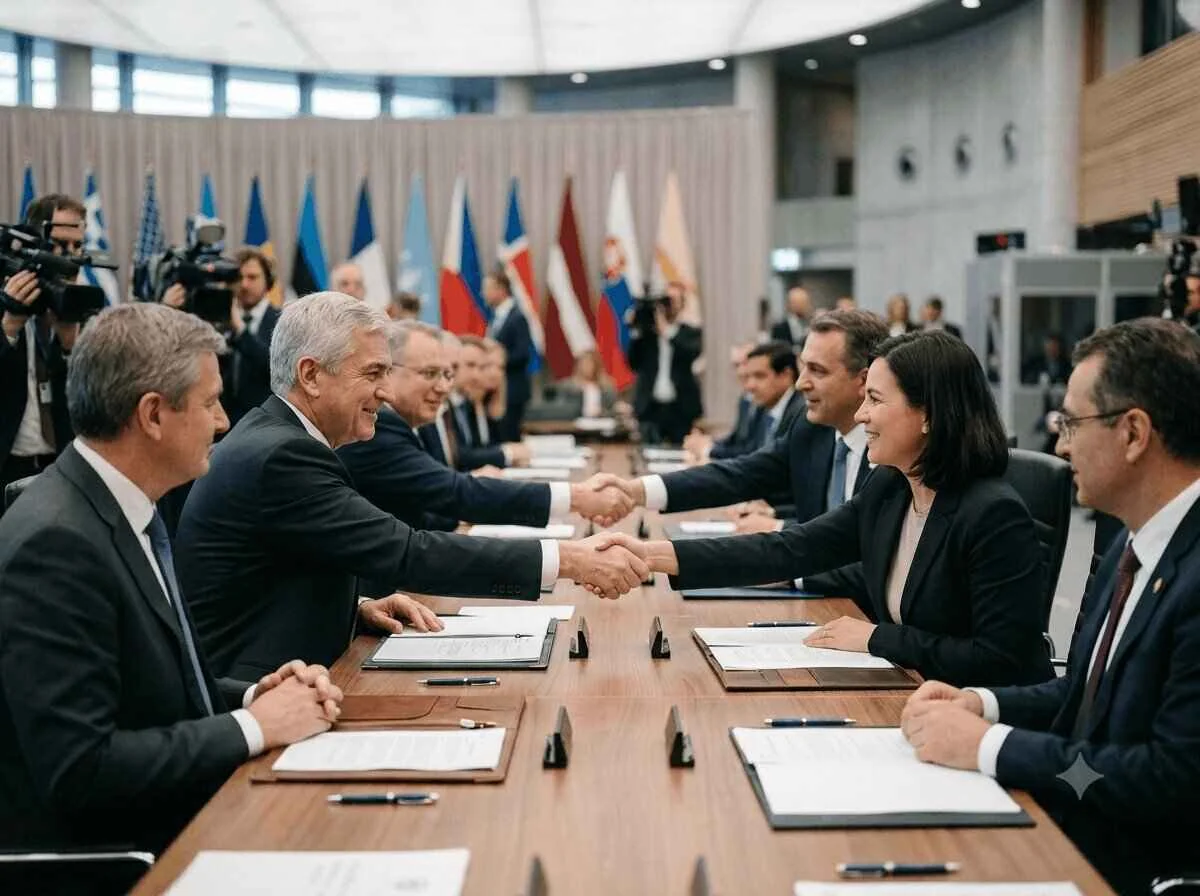
Representatives from two of the world’s largest economic blocs signed a landmark trade agreement on Monday, ending nearly four years of negotiation and setting the stage for what officials describe as one of the most significant shifts in global trade policy in recent memory.
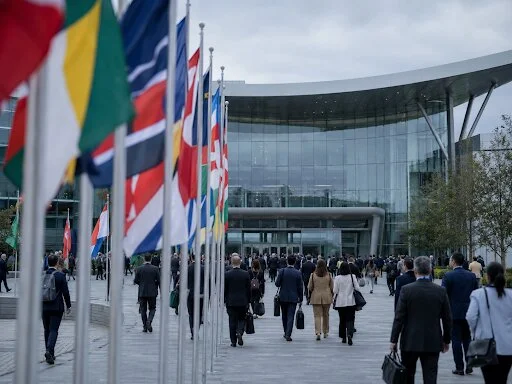
The pact, formally titled the Continental Trade Partnership, was signed in a ceremony at the Halworth Conference Centre by trade ministers representing the Northbridge Economic Union and the Calden Pacific Alliance. The agreement eliminates tariffs on more than 600 categories of goods, ranging from agricultural products to advanced manufacturing components, and establishes new frameworks for digital trade and intellectual property protections.

“This agreement reflects years of difficult compromise, but it gives businesses on both sides the certainty they have been asking for,” said Helena Voss, chief trade negotiator for the Northbridge Economic Union, during the signing ceremony. Voss’s remarks are illustrative of the cautious optimism shared by officials who steered the talks through several near-collapses since negotiations began.
Years in the Making
According to officials familiar with the negotiations, talks stalled multiple times over disputes involving agricultural subsidies, labor standards, and rules of origin requirements for manufactured goods. A particularly contentious round two years ago nearly ended the process entirely, before both sides agreed to a phased implementation model that allowed sensitive sectors more time to adjust.
Economists tracking the talks say the final agreement represents a compromise that protects politically sensitive industries, such as dairy and steel, while opening broader access in sectors like electronics, renewable energy components, and pharmaceuticals. Officials from the Calden Pacific Alliance said the agreement also includes new dispute-resolution mechanisms intended to prevent the kind of prolonged trade frictions that have disrupted commerce in the past.
Markets in both regions responded positively to the announcement, with shares of manufacturing and logistics companies posting modest gains on Monday following the signing.
What It Means for Businesses
Trade analysts say the agreement’s phased rollout, set to begin within the next six months, will give companies time to adjust supply chains and pricing strategies. “Businesses that depend on cross-border components will likely see cost relief within the first year, though the bigger structural shifts will take longer to materialize,” said Marcus Lindqvist, senior economist at the Brennan Institute for Trade Studies, in comments framed as illustrative of broader analyst sentiment.
Industry groups on both sides have largely welcomed the pact, though some smaller manufacturers have raised concerns about increased competition once tariff protections phase out. Officials from both blocs said additional support programs for affected industries are under discussion as part of the agreement’s implementation phase.
A joint committee is expected to convene within the coming weeks to begin coordinating the technical rollout of the agreement’s provisions.









Post Comment
You must be logged in to post a comment.