

Share this content:
Humanitarian trucks finally cross into the Harlowe Corridor as relief organizations warn that the delay has worsened conditions for thousands of displaced residents
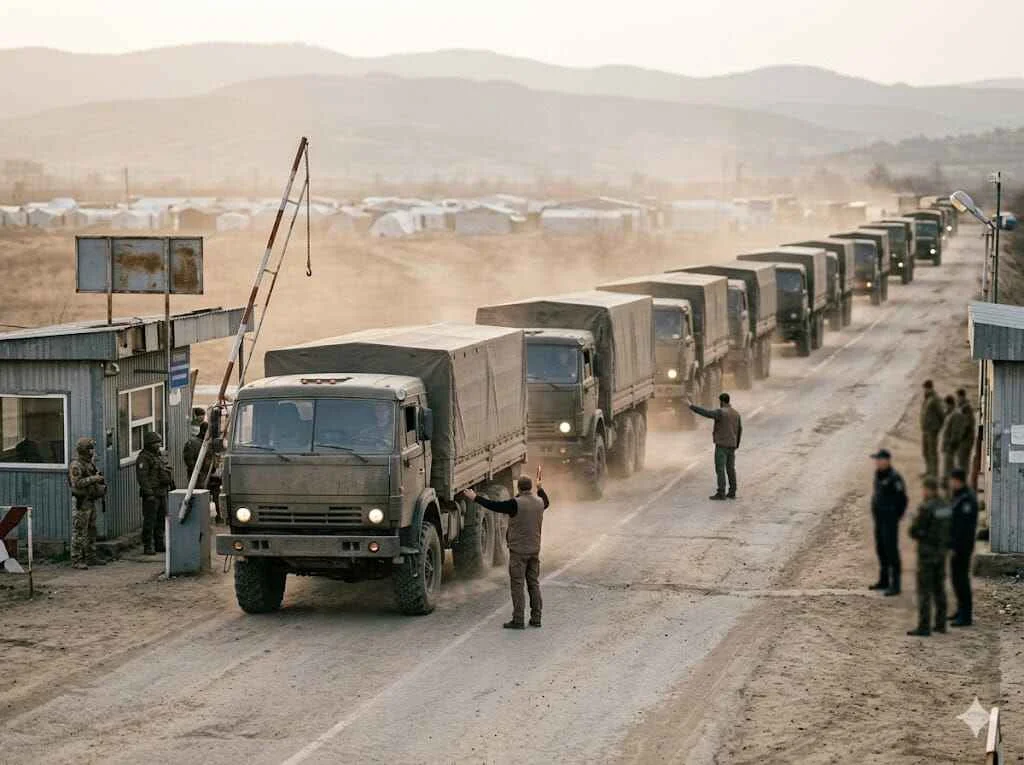
The first humanitarian aid convoys in nearly three weeks crossed into the Harlowe Corridor on Friday, bringing food, medical supplies, and clean water to communities that relief agencies say had been cut off since access routes were blocked in late April.
A coalition of international relief organizations confirmed that 42 trucks carrying emergency supplies passed through the Bessen Crossing checkpoint after days of last-minute negotiations between regional authorities and aid coordinators. The convoy’s arrival follows growing pressure from humanitarian groups, who had warned that continued delays risked a sharp deterioration in conditions for an estimated 180,000 displaced residents sheltering in the region.

“Every day this convoy was held back, families went without the basics they needed to survive,” said Daniel Asare, regional coordinator for the Relief Alliance Network, in a statement Friday. Asare’s remarks are illustrative of the urgency expressed by aid workers who have been stationed at the border awaiting clearance.
Weeks of Negotiation Before Breakthrough
According to relief officials, the convoy had been staged near the Bessen Crossing since early May, delayed first by security concerns following clashes in nearby districts, and later by administrative disputes over inspection procedures. Local authorities cited the need for security screening of cargo, while aid organizations argued that the process had been used to slow deliveries far beyond what was operationally necessary.
A breakthrough came Thursday evening when regional officials and a delegation from the Cross-Border Humanitarian Office agreed on an expedited inspection protocol, allowing trucks to be cleared in batches rather than individually. Aid workers on the ground said the convoy began moving within hours of the agreement being finalized.
Field reports from relief teams indicate that the supplies, including therapeutic food for malnourished children, water purification kits, and basic medical equipment, are being distributed through five distribution points across the corridor’s largest settlement camps. Camp coordinators say the deliveries arrive as existing stockpiles had run critically low, with several clinics reporting shortages of essential medicines in recent weeks.
Calls for Sustained Access
Humanitarian groups have welcomed the convoy’s arrival but cautioned that a single delivery will not resolve the underlying access challenges. Officials from the Relief Alliance Network said they are pressing for a standing agreement that would allow regular convoys to cross without repeated negotiation, warning that another prolonged gap could reverse any progress made this week.
Regional authorities have not indicated whether such an arrangement is under consideration, though officials from the Cross-Border Humanitarian Office said talks on a longer-term access framework are expected to continue in the coming weeks. For now, aid coordinators say their immediate focus remains on distributing current supplies and assessing which communities require the most urgent follow-up support.











Post Comment
You must be logged in to post a comment.